Showing posts with label Another Lonely Hitman. Show all posts

Saturday, December 18, 2010

2010 Yakuza Film Wrap Up

It's time to wrap up 2010 with the best and worst of the Yakuza films reviewed this year.  Six films have been reviewed this year, and here is the list:

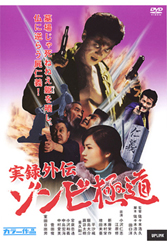
6. Yakuza Zombie.  A bumbling low-level Yakuza who is double crossed and killed is reanimated by the spirit of a vengeful Yakuza.  It wasn't an outright obvious comedy, but it was pretty preposterous, so I'm assuming it's a comedy, but you just can't tell;  that worked against it - it's too ridiculous to be a completely serious movie, but there is very little straight comedy, so it's hard to figure what to make of it.  A solid cast, a goofy plot and low budget (as in, I couldn't tell if it was made for video or made for network TV), Yakuza Zombie pulls up the rear for the Rundown's reviewed films.

5. Another Lonely Hitman.  Not the worst I've seen this year, but the painfully slow pace really hobbled this one for me.  Short on action, long on non-action - it's trying to be a hipster art film when it's just a Yakuza film.  I don't really know if the Yakuza genre lends itself to artsy character study, but it didn't really do it for me - in this case, it didn't put itself in one genre or the other strongly enough, so you're sort of left with a Yakuza film that has long scenes of stage-setting and character study.  Because it's one of the bridges between the old school and new school of Yakuza films, it's worth a look, but don't get your hopes up too much.

4. Wild CriminalWild Criminal straddles the line between crime drama (like Gonin) and Yakuza film - no stereotypical scenes of Yakuza in their Yakuza office sitting around smoking and yelling at eachother across a table, this is mostly the outer reaches - the Yakuza-run clubs and casinos.  As usual both Ozawa Hitoshi and Riki Takeuchi deliver the goods, and there is a good twist at the end that I feel like I should have seen coming, but didn't, so kudos to the director or scriptwriter there.  Basically this is a standard Yakuza movie with a crime-drama bent, and probably easier for the average movie buff to digest because there aren't as many cultural quirks to confuse the viewer not familiar with Japan.

3. Like a Dragon.  Takashi Miike does his thing again with a Yakuza movie based on a video game, and although this is normally a recipe for disaster, Miike pulls it off almost brilliantly (note: almost), with the help of a bad ass Kitamura Kazuki, and the absolutely over-the-top Kishitani Goro.  Kishitani is the biggest show stealing bad guy since Jack Nicholson in the original Batman, and maybe even more so.  This one has respectable production value, although it looks like nearly all of it was filmed on a soundstage, but that doesn't take away from anything - what does is the ridiculously convoluted plot.  I had to watch it three times to get it all straight - I suppose if you've played the videogame it already makes sense, but for the rest of you, you can read the Yakuza Film Rundown review, where I break it all down.

2. Shinjuku Incident.  I'm sure this has been described as "Scarface in Tokyo", and that's right - Shinjuku Incident is a near epic.  Having seen Jackie Chan in so many goofy roles I was blown away - maybe that's my fault for not seeing any of his serious stuff before (and I'm sure neither has any other average Joe, so fuck off), but Jackie was brilliant, as was the entire Chinese cast.  Surprisingly Masaya Kato brought very little energy to the role, and after seeing him in movies like Brother, Blood Heat, and Agitator, I expected a lot more, because I know he can deliver - so who gets the blame? The director? Masaya himself?  Not sure, but it was passable but not above and beyond like I would have normally expected.  I was also a little disappointed that Jackie Chan wasn't more of a bad guy, in the end he held on to his good guy image.  That aside, Shinjuku Incident was a great movie, and I watched it three or four times in the space of three weeks while writing the original review - it was that good.  Rent or buy, do whatever you want, just see it.

1. Graveyard of HonorGraveyard of Honor, directed by Takashi Miike, deserves the number one spot - it's brutal, violent, disturbing, and damn near perfect.  I first saw it in Japan in 2004, and watched it three times before returning it to the rental place.  Kishitani Goro owns the role of Ishimatsu in a terrifying display of what should be an award winning example of method acting.  Not only is he completely believable as a brutal psychopathic Yakuza, and composes the nuances of the near-emotionless demon perfectly, but he becomes Ishimatsu.

The rest of the cast can't be sold short, either - Miki Ryosuke is a great supporting actor, and Arimori Narimi is perfect as Ishimatsu's pathetic and abused lover.  If you only see one Yakuza movie in the next 12 months, it should be Graveyard of Honor - It is a grand display of Takashi Miike and Kishitani Goro's skills as filmmaker and actor, respectively.  Graveyard of Honor has so many underlying themes and nuances, it takes multiple viewings to take them all in.

Some probably see it as little more than a showcase for violence, but in the big picture, there is so much more, so get it on Netflix or buy it now!

That's the wrap up for 2010, see you next year!
Sunday, September 19, 2010

Another Lonely Hitman (1995)

This Rundown's Yakuza movie is Another Lonely Hitman, directed by Mochizuki Rokuro. This movie takes us back to the early days of the "new school" of Yakuza Films that would ultimately result in movies like Takashi Miike's Ichi the Killer, Gozu, and Yakuza Demon. But Another Lonely Hitman predates even the earlier new school stylish Quentin Tarantinoish Reservoir Doguesque features like Adrenaline Drive, and Sharkskin Man and Peach Hip Girl that really kicked off the boom in new wave Yakuza films.  In fact, Mochizuki made Another Lonely Hitman in direct response to Toei's decision to end their Yakuza film production, and thus may have had a hand in bringing the genre back to life. Short on onscreen violence and long on emo, Another Lonely Hitman,  delivered exactly what I expected of it. And not to bad effect. 

Interestingly enough, the English language title "Another Lonely Hitman" is actually better than the Japanese title Shin Kanashiki Hittoman (新・悲しきヒットマン - New Lonely Hitman) - the movie actually gets its title from an older movie of the same name (which it also apparently has no real relation to), which in Japanese gets the newer version prefixed with "New" - so it should actually read "The New Lonely Hitman", but "Another Lonely Hitman" has a much better ring to it, even if it isn't quite an accurate reflection of the Japanese title (in fact, to get seriously overly technical, an even more accurately nuanced translation would be something vaguely like "The New Ambiguously Sorrowful Hitman" - not a title that really grabs you).

Ishibashi Ryo plays the titular "Lonely Hitman" Tachibana, and director Mochizuki uses every cinematic trick in the book to really drive that lonely feeling home, from filming him walking down a lonely highway from the rear window of a receding car to having him constantly walking down empty streets. Ishibashi also does a great job of giving us both a Yakuza with a tough side, and a reflective, lonely side, making for an interesting character study.

If I had been able to locate a movie trailer, it would have gone here. Sadly, the Trailer Tradition will have to be skipped for this movie. Even Youtube seems to be bereft of clips from Another Lonely Hitman. Looks like my words will have to paint the pictures on this rundown, so let's get to it.

The Plot.

The story involves Takashi Tachibana, who gets out of jail after a decade for a mob hit having to come to terms with a Yakuza world that has changed since he was last on the streets. Tachibana straddles the gap between honorable Ninkyo hero and rebellious Jitsuryoku antihero, following a Yakuza code that just doesn't seem to exist anymore. New laws, new rules, and new pressures have forced the Yakuza to adapt, and migrate from violence to business, and to settle scores with money rather than guns - to leave behind the code of honor so integral to who Tachibana was before he want to jail. Ironically, this leaves the otherwise contemplative Tachibana looking like the loose cannon of the group. Try as he might, he just isn't going to fit in to the new world of the Yakuza. It's as if his time in jail left him wanting desperately to be back in the Yakuza world he left but also with an inability to cope with all of the changes of the past 10 years, hence the "loneliness" mentioned in the title.

Things do start off well for Tachibana - his old gang is waiting for him when he walks out of the stir with a big fat stack of envelopes of cash, and that evening they send him a working girl from the "Lolita Club" by the name of Yuki to share his free hotel bed. Yuki is a cynical streetwise heroin addict with an Osaka accent as thick as okonomiyaki (in fact the entire movie is one big Osaka-accented fiesta), and Tachibana seems to fall for her despite himself. And that's where the trouble starts. Doesn't it always? As he parts with Yuki, he sees her take a beating from her pimp, and somewhat reluctantly he returns, and opens a can of whupass on him. Unfortunately it turns out this pimp works for another Yakuza gang that Tachibana's group is in an uneasy alliance with, and some of his get-out-of-jail money is used to make amends. By this time Tachibana starts to see that things have changed, that the rules and code that he lived by before going to jail have fallen by the wayside, which starts to put him at odds with the other members.

By this point, Tachibana and Yuki are an item, and Tachibana decides to get Yuki off heroin for good. His method is pretty straightforward - he chains her to the bed and tosses all her junk. Apparently thinking about the future, he also cuts out a job listing for fishermen from the newspaper - but will he make the trip from Hitman to Fisherman?

Tachibana continues to further isolate himself from his Yakuza brethren by getting involved in a variety of confrontations with other gangs that start to alienate his group, including beating up a drug dealer played by none other than Takashi Miike, director of the horrific Audition and now-legendary cult classic Ichi the Killer mentioned above. Miike is listed in the credits as Miike Docomo, and I personally took the initiative to get him listed in the credits on the IMDB page for the movie. Yup, that's my handiwork you see there. After some poking around on google.co.jp, it appears that Miike never used his full name in his bit-parts, he went with cellphone-related names, including "Moba" and "Docomo", and also directed One Missed Call (着信あり). Not sure what his phone fetish is about, probably little more than an interesting footnote.

At this point in the movie it has been made apparent that Tachibana and the Yakuza are at an impasse. It's Tachibana's move. He could probably make his peace with the Yakuza and walk away, but this is a Yakuza movie, after all. Graceful exits and Yakuza just don't mix.

Highlights.

The restaurant scene at the start of the movie that results in Tachibana's trip to the slammer is a definite highlight with the only scene of overt screen violence. The movie actually starts with Tachibana shooting up heroin to gather the courage to pull off his first hit, and I immediately noticed it was almost identical to a similar scene in Takashi Miike's Graveyard of Honor, which was the subject of a prior Yakuza Film Rundown, which leads me to wonder if the half-closed eyes and the head lolling towards the ceiling while shooting up heroin is a common occurrence, or just how it is commonly portrayed in Japanese crime dramas.

The Violent Rundown.

As always I kept a tally of violence, and Another Lonely Hitman came in a little lighter on onscreen violence than most, which is understandable since Hitman seems to try to be more of a character study than a crime drama. That being said, we still have 5 beatings, 2 scenes of graphic drug use, 3 shootings, a knife wound, 3 scenes of women being beaten up, and one off-screen dismemberment. All in all a not unsatisfactory collection of violence for aficionados.

Cinematography.

Like I mentioned before, director Mochizuki really tries to highlight Tachibana's isolation emotionally with physical isolation - he's constantly walking on empty streets, and when he takes Yuki to an amusement park, it seems they are the only two people there. Another camera angle of note is Tachibana seemingly breaking the "fourth wall" by barfing on the camera near the beginning of the movie. So far, Mochizuki has done more to use cinematography to set the tone than the directors of the prior Rundowns.

Final Verdict.

Although Hitman follows many of the traditional Yakuza cliches with an ending so predictably entrenched in Yakuza film tradition you should already know how it turns out, it is much more a character study with the Yakuza lifestyle as background rather than as a main player. The themes of isolation that highlight Tachibana extend from the style of filming to Ishibashi's thoughtful performance. The movie has a slow pace, and with most of the violence more often than not offscreen, crime/action junkies who prefer hails of gunfire to drama will probably be turned off.  This may be explained by an interview with Mochizuki where he stated that he doesn't particularly like filming violence.

Something this movie does have going for it is that it came about right at the start of the new wave of Yakuza movies (a new wave originally foreseen by journalist Ken Eisner in an article in Variety, back when the movie originally ran, in fact), and so Hitman acts as the intermediary step between the violent Yakuza flicks of the '70s to the Yakuza films of the 21st century, and should be viewed as a step along that path. Another Lonely Hitman shows you where the modern Yakuza films came from, but it's still anyone's guess where they are going.  All in all a pretty impressive accomplishment for a former porn director who initially dropped out of college, got kicked out of his parent's house, and started out working in a yakitori restaurant before heading off to film school.

In regards to how it stacks up to the other Yakuza movies I've examined so far, I'll put it just behind Like a Dragon.  It is a solid Yakuza film, but slow paced, and ultimately predicable, and just not quite as fun as many other Yakuza films.  That being said, it is still a good movie and worth a look.  You can find Another Lonely Hitman at the Yakuza Film Store, and on Netflix.

That's a wrap for this Yakuza Film Rundown - join me next month when I Rundown a Yakuza film with a horror flair in honor of Halloween. Until next time.